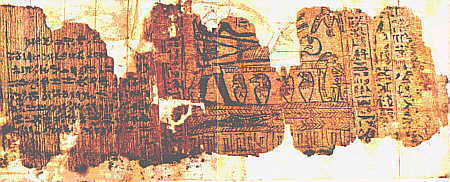
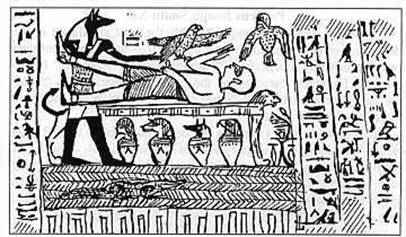
Runtu wrote:That would be because they aren't what the Book of Abraham says they are. I don't know of anyone with any expertise who thinks that Joseph's Smith's explanations of the facsimiles are in any way correct.
The point is, is that the symbolism used in the Facsimiles
could represent a wide array of stories.
As has been pointed out, an unnamed German dissertation from many years ago isn't exactly convincing.
Perhaps not, and the reference I read did not cite any sources because it was a reply to Ashment.
This is kind of silly. According to Nibley, Anubis is either represented himself, or by a priest wearing an Anubis-head mask, resurrecting the deceased person. The Book of Abraham has no Anubis head or mask but instead has a bare-headed priest with a knife about to sacrifice a living person.
Then why does Paul think it is Anubis?
To summarize:
1. The figure stands in the position of Anubis and wears Anubis's clothing.
2. Some figures show the head of Anubis, while others show the priest wearing a mask representing Anubis.
3. Nevertheless, this figure doesn't have to represent Anubis.
Clear enough?
Clear enough... I do not know what your point is. It is very possible that it is not Anubis, but simply a priest.
This might make some remote sense if Nibley is correct in saying that the facsmiles "tell the widest variety of stories," but he has provided nothing other than a passing reference to an unnamed dissertation.
But there is nothing to say that they could not tell the story that is in the Book of Abraham.
In what way is embalming someone "regarded as a form of sacrifice"?
I can't help you there, I'm afraid.
There is no incision involved. The knife the priest in Facsimile 1 holds was added by Joseph Smith. No incision, no sacrifice.
Where do you get this information from?
Except he provides no modern research and no examples of even slightly different stories.
Again, it was probably a quick reply (I don't know the entire background).