Cahokia
Posted: Thu Feb 25, 2010 2:07 am
For your consideration:
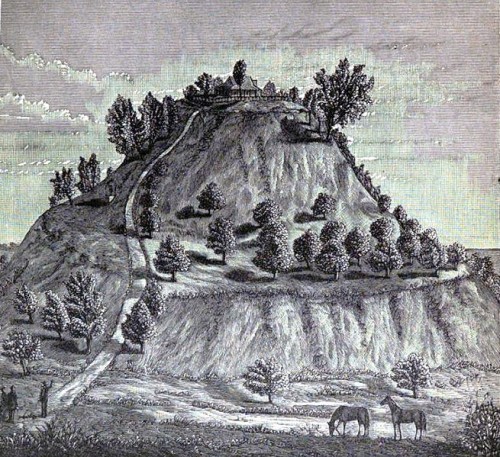
It’s hard to believe there was a city in the U.S. that outnumbered any other in population, that was larger than even London at one point, that served as the biggest urban center north of Mexico – and that lots of us have never even heard of.
It’s Cahokia, Illinois, about 15 minutes away from St. Louis, Missouri. It was inhabited for about 700 years and was home to up to 20,000 people when it peaked from 1050-1200. More than 120 “mounds” were built for ceremonial purposes and to provide a prestigious spot for temples and the homes of chiefs.
Lots of interesting things have been discovered in excavations at Cahokia over the years. It even had its own Stonehenge – in fact, maybe up to five of them. Dubbed “Woodhenge,” archaeologists think the early residents of Cahokia used red cedar posts stuck in deep pits to mark days and events. One of them has been reconstructed for tourists to the Cahokia area.
Other advancements found include a copper workshop and watchtowers.
A slightly more disturbing discovery was hundreds of skeletons, including a mass grave of more than 50 women who were about the same age. Another mass grave was found containing both men and women, some of whom where apparently buried alive. It’s believed that they were sacrificial victims.
All of these signs of thriving civilization have to make you wonder: what the heck happened? How does a city go from being one of the largest in the world to being practically nonexistent in less than 200 years? Well… we don’t really know. There are plenty of theories, from widespread disease to political collapse. But since the people who lived there left absolutely no written record, we have no idea what actually happened. We also don’t know who these early people were – although we know all about the French missionaries who settled in the area in 1699 and the monks who made the mounds their home in 1809, it’s still not known what Native American tribes might be descendants of those early people.
