Imaginary Indians and the LDS
Posted: Wed Oct 06, 2010 10:23 pm
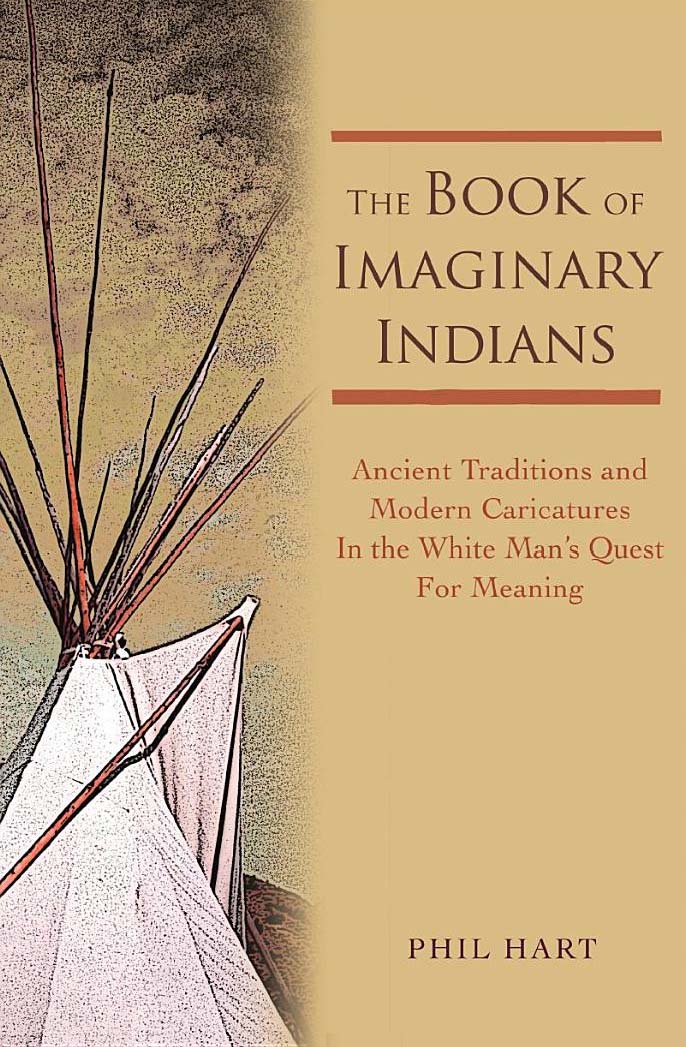
Anybody read this book?
Uncle Dale
Uncle Dale
Internet Mormons, Chapel Mormons, Critics, Apologists, and Never-Mo's all welcome!
https://discussmormonism.com/
Darth J wrote:No, but judging from the subtitle, I have read a book that is very, very similar.
MCB wrote:No, I have never seen it. It does look interesting. Waiting.......
[8]
...
some other part of America who more closely resembled the people described in
the Book of Mormon. Vogel has already shown us his evidence that Joseph Smith
may have had the mound-builder Indians in mind when he wrote the Book of
Mormon. Where Vogel finds circumstantial evidence for that, Vernal Holley has
found almost undeniable proof. In his Book of Mormon Authorship, a Closer
Look, [9] Holley printed a pair of maps (see pages 10 and 11) showing what is
almost certainly the geography of the Book of Mormon as Joseph Smith envisioned
it. When Holley superimposed ancient geography over a modern-day map
of the Great Lakes region of the United States and Canada, an area with which
Joseph Smith was familiar, everything lined up exactly as it should, with Lake
Ontario being the "Sea East" and Lake Huron being the "Sea West" and the
"narrow neck of land" running between them. Using this configuration, you can
easily see that a great many of the Book of Mormon place names, when superimposed
on this map, are nothing more than disguised variations of modern twentieth-century
American place names which are still found in the northeastern
United States and are sometimes even found on modern day road maps! For
example, the Hill Onidah is lined up with Oneida Castle in New York state in
Oneida County, which was the home of the Oneida Indians. Holley says that the
Genesee River of New York "fits all the descriptions given in the Book of Mormon
for the River Sidon." [10] The narrow neck of land and lines of fortifications
are exactly where they should be: "In his Geography of New York State, J. H.
Thompson says that "sixty-seven ancient fortified earth works have been found in
an area extending from Lake Erie past the headwaters of the Genesee River and
on into the Oneida Indian country." [11] In his book, Holley gives a list of Book of
Mormon place names next to a corresponding list of their modern-day counterparts
still found on contemporary maps:
MODERN MAPS ----- Book of Mormon
.....
[12]
Now, anybody could probably look at any map and find one or two similar
place names which, through sheer coincidence, sound like they should if you
changed a couple of letters. But to find this many place names that are that similar,
and to get them to all line up on the map exactly where they are needed for
the Book of Mormon geography to be valid is far too much to ask from mere
coincidence. Vernal Holley's discovery all but proves that Joseph Smith had the
local geography and the mound builder Indians in mind when he wrote the Book
of Mormon. He wanted us to assume, apparently, that the mound builders were
either the ancestors or the historical antagonists of the more modern tribes living
in the region, not realizing that these modern tribes were relative newcomers who
didn't move into the region until around the 1700s, long after the events of the
Book of Mormon were supposed to have taken place. The mound builders themselves
occupied the territory until then; and they could not have been the vanquished
race of the Book of Mormon since they continued to live there building
mounds until the 1700s, long after they were supposed to have been slaughtered.
The Oneida Indians, for whom the Book of Mormon's "Hill Onidah" may have
been inadvertently named, could have taught Joseph a lot about Native Americans
had that been his real concern.
A member tribe of the Six Nation Confederation of tribes consisting of the
Mohawks, Oneida, Onondaga, Cayugas, Tuscaroras, and Senecas, the Oneidas
were part of a tribal federation which predated the federation of the thirteen colonies
and may have helped serve as a partial model for the U.S. Constitution and
federal government (or at least they claim it was). The Oneidas are divided into
three clans: the Bear, the Wolf, and the Turtle. They live in a matrilineal society,
which means that their clan membership as well as the family name is passed on
from mother to daughter rather than from father to son. That fact alone makes it
extremely unlikely that they are descended from any Hebrew tribe. In the Oneida
system of government, only women are allowed to vote, but only men can serve
on the tribal council. So the women elect the men who run the community, a
power agreement which is certainly unique in the history of democratic institutions.
We may surmise from their system of government alone that the Oneidas
were at least as civilized as the hillbilly white folks who surrounded them at the
time; the Oneidas themselves are very proud of the fact that during the Revolutionary
War, they fought valiantly on the side of the Americans to help drive out
the British in several decisive battles in upstate New York. [13]
All of this, of course, could have easily been discovered by Joseph Smith
through the simple method of encouraging the Oneidas and other tribes to talk...
moksha wrote:Uncle Dale, the cover seems nice, but I will await the FARMS Review judgment on that. They might even deal with the contents as well.

Darth J wrote:No, but judging from the subtitle, I have read a book that is very, very similar.
UD wrote:The last time anybody quoted me anything from FARMS,
it was in reference to Lamanite skins turning dark
being, actually, that they wore dark animal skin clothing.
The next page was about how Aztec drawings showing
various skin shades, demonstrate the truth of the Book
of Mormon -- in which Lamanite skins (not clothing)
turned dark due to apostasy.
The polemicist's explanation was that the Aztec?Maya artists,
having limited skills and time, took the expediency of
actually coloring some folks' skins dark, rather than
going to the trouble of drawing dark clothing upon them.
Yeah, I am sure. I will have to get my copy of Clavigero up and do a search. I am sure.Maybe it's body paint.