If you google "Hebrew gospels" you learn some interesting things.
Some early Christian writers mention a "gospel of the Hebrews", and even quote a few passages from it. Although purportedly used by early Jewish Christians, this gospel text was not in Hebrew, but Greek. There may have been as many as three separate gospels of this kind—it is hard to be sure whether different writers quoting from "the gospel of the Hebrews" are really referring to the same text. Only these few quotations survive, anyway. One of them presents a theory which evidently didn't catch on, that the Holy Spirit was the Mother of Jesus.
There has also long been a hypothesis that the Greek Gospel of Matthew is a translation of a lost original version in Hebrew or Aramaic. It doesn't seem to be considered a likely hypothesis by scholars in general because Matthew doesn't show enough signs of being a translation. It could just have been a really good translation but this seems to be doubtful; I don't know why it's considered so. Maybe quite a lot of ancient translations into Greek from local languages have survived and most are not all that good, so any theory that requires great translation is a long shot?
The oldest oral Christian traditions were presumably in Aramaic, which had supplanted Hebrew as a vernacular language, to the point where the books of Daniel and Ezra in the "Hebrew Bible" are actually in Aramaic. As "the language of the Hebrews," Aramaic may have been confused by non-Jewish ancient writers with Hebrew. So in some sense the oldest Christian sources were probably at least Hebrew-ish, but it's not clear that these existed in written form.
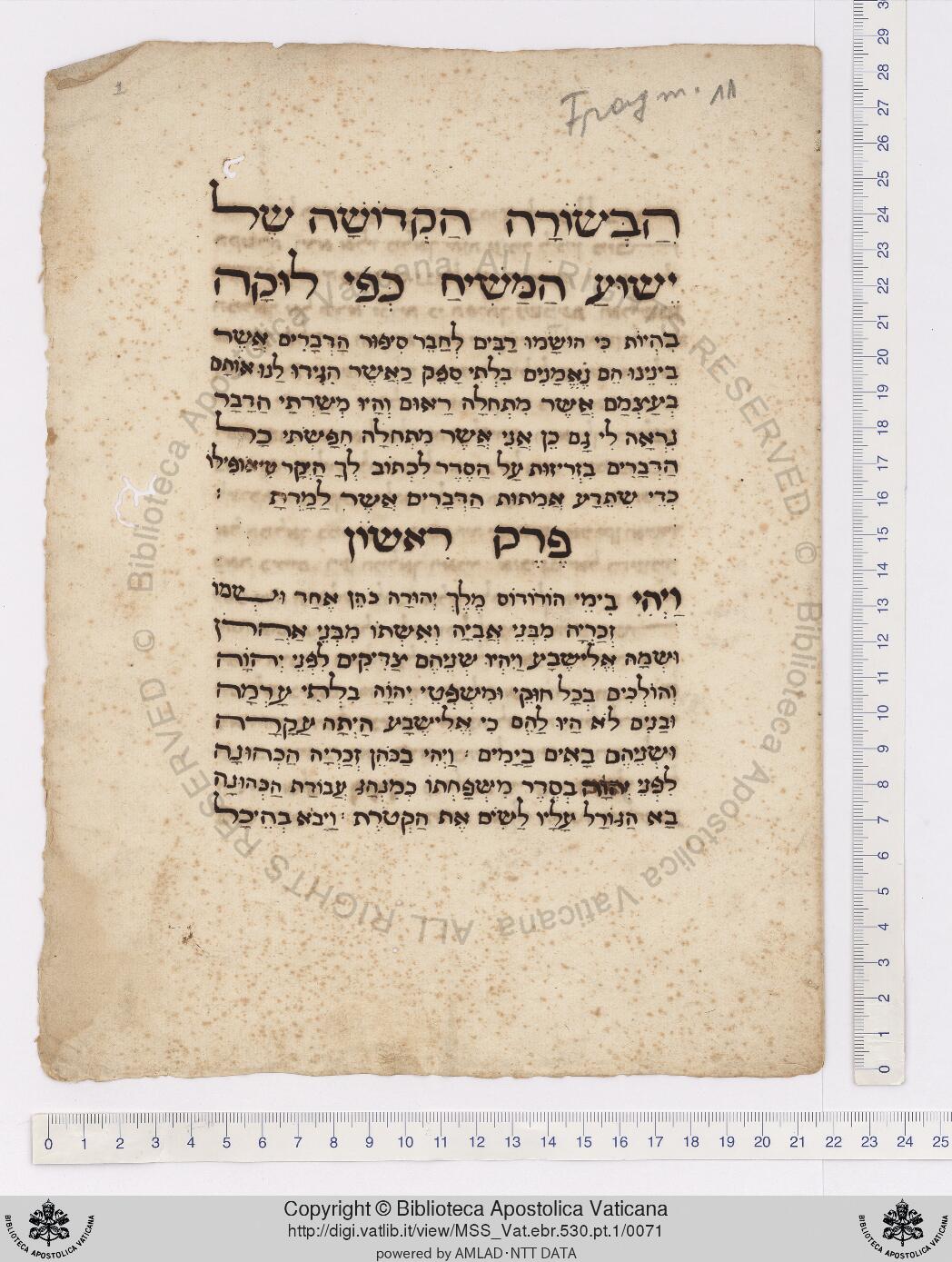
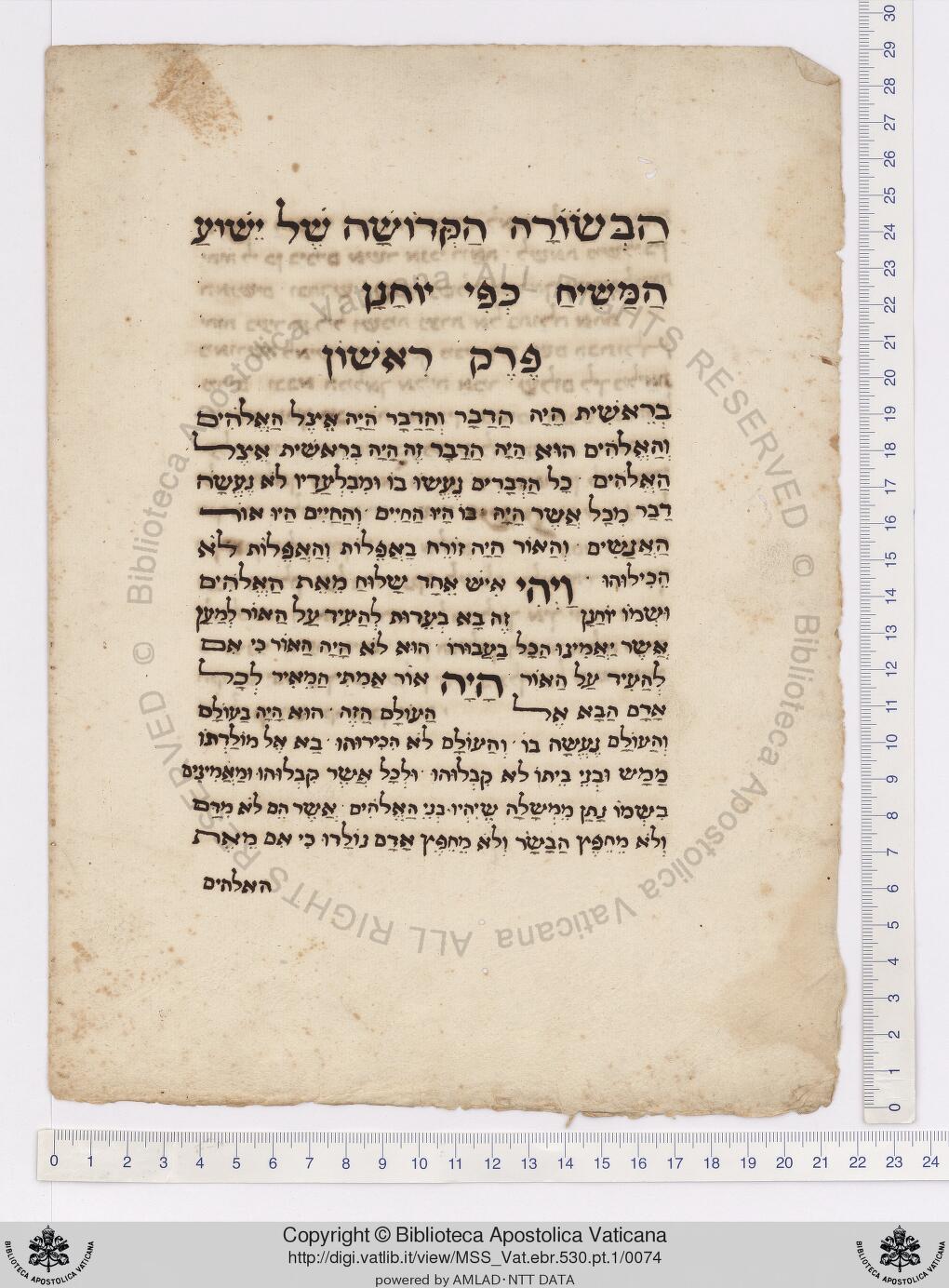
Then there are these late medieval translations of the canonical gospels into Hebrew. The translations were made by rabbis living in Christian states, in order to study Christianity and argue against it. The arguments given in the papers in the OP links, to say that these are not late translations but Hebrew originals, seem awfully weak to me.
The first argument for authenticity which is made in the linked text of John is to say, in effect,
The Hebrew text of John says "ben" (son) instead of "logos"!
Um, yeah: Jewish Christians who didn't speak Greek probably would not have written "logos", but neither would anyone who was translating "ben" into Greek. They would have written "uios" (son), which lots of Greek Christians obviously did use for Jesus. "Ben" may make some sense as a Hebrew translation for "logos," at least in translating the Gospel of John, but "logos" does not make sense as a Greek translation of "ben". So this first argument for authenticity is actually a strong argument for late translation. The fact that the author does not realise this is not an encouraging sign for the rest of their effort.
Arguments from wordplay are as tenuous here as they are when they are used to support the Book of Mormon as a translation from Hebrew. Taking a clunky passage in Greek or English, and rendering it into snappier Hebrew, doesn't prove that the clunky passage was translated from a snappy Hebrew original. It just proves that the Greek or English is clunky, and can be rewritten more snappily into any language, if a writer with enough flair for prose takes the time to rewrite it.
It also helps that we can all recognise clunky English, and some can tell clunky Greek, but there are no ancient Hebrew poets around to raise their eyebrows when we say how natural and elegant our Hebrew version would have been for them.