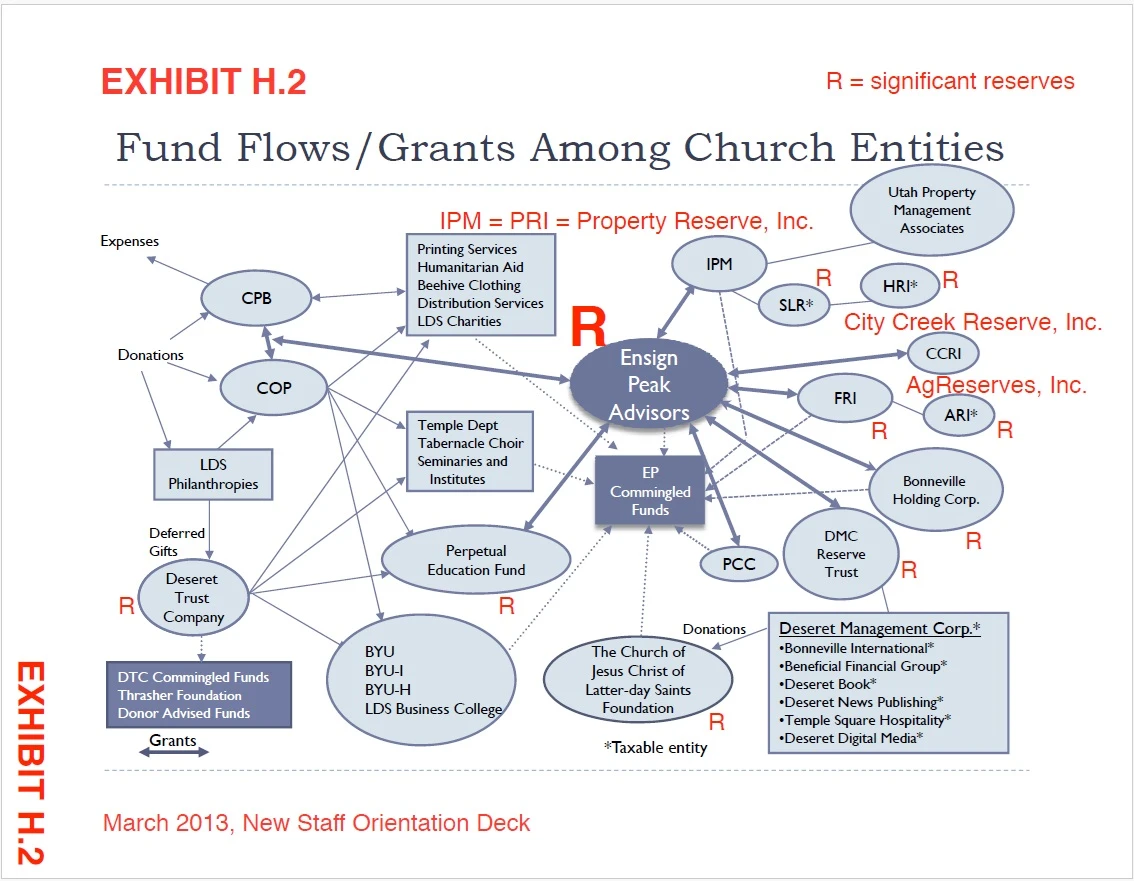
This new lawsuit against the business and investment entities under the church in U.S. District Court in Salt Lake City is similar to one filed in federal court in California by James Huntsman, brother of former Utah Gov. Jon Huntsman, Jr., that recently scored a partial success on appeal and remains pending. That lawsuit seeks the return of $5 million he donated before he left the church.
In February, the U.S. Securities and Exchange Commission fined the church and Ensign Peak $5 million for using shell companies to obscure the size of the investment portfolio under church control. The church agreed to pay $1 million and Ensign Peak will pay $4 million.
Church officials didn’t immediately respond for comment on the lawsuit.
The lawsuit is filed by Daniel Chappell, of Virginia, and Masen Christensen and John Oaks, both of Utah. They claim the three of them combined have donated about $350,000 to the church over the past decade. Their lawsuit seeks class-action certification, potentially involving millions of church members, and an independent entity to oversee collection and use of church donations.
I’d like to know how much tithing has been used to silence sexual abuse victims.
Premise 1. Eyewitness testimony is notoriously unreliable.
Premise 2. The best evidence for the Book of Mormon is eyewitness testimony.
Conclusion. Therefore, the best evidence for the Book of Mormon is notoriously unreliable.
Given the 9th Circuit’s decision in the Huntsman case, I suspect we’ll see a few more. Not sure the class action angle will work, but the briefing will be interesting.
he/him
“I prefer peace. But if trouble must come, let it come in my time so that my children can live in peace.” — Thomas Paine
Premise 1. Eyewitness testimony is notoriously unreliable.
Premise 2. The best evidence for the Book of Mormon is eyewitness testimony.
Conclusion. Therefore, the best evidence for the Book of Mormon is notoriously unreliable.
I haven't seen the new complaint, but that's my understanding. The trial court in Huntsman's case ruled, as a matter of law, that the church did not make fraudulent statements about the use of tithing funds in the Beneficial Life bail out and the construction of the City Creek Mall. In a 2-1 decision, the 9th Circuit panel affirmed the dismissal of the Beneficial Life claim, but reversed the dismissal of the City Creek claim. Essentially, it found that a reasonable juror could find that the Church made fraudulent statements, and so the jury should get to decide that issue. The Church has moved for reconsideration by an en banc panel, which means the appeal would be decided by a panel of 11 randomly selected judges. Motions for en banc review are rarely granted. If the motion is denied, the church will undoubtedly file a petition for certiorari with the U.S. Supreme Court. Whether the Court would take the case is anybody's guess. The terrible opinion in the Bremerton School District case indicates they might.
Given the 9th Circuit's ruling, a case based on City Creek can at least get to a jury, which is some incentive for others to file suit.
I'll post a copy of the new Complaint when I get a chance to track it down.
he/him
“I prefer peace. But if trouble must come, let it come in my time so that my children can live in peace.” — Thomas Paine
I'm sure glad the Church was secretly hoarding hundreds of billions of dollars over the last several decades, so now there will be plenty of money to pay back those same tithe payers in court.
Truly inspired. You really can see God's hand in directing the Church.
"I'm on paid sabbatical from BYU in exchange for my promise to use this time to finish two books."
There should also be some concern about the Church handing over its tithing rolls to someone like Tim Ballard and OUR. Bet they have also given it to the Utah Republican Party. The tithing rolls being given to OUR should be part of the class action lawsuit.
Here's a link to the complaint. https://www.courtlistener.com/docket/67 ... Christ-of/
One interesting thing it does is include both tithing and non-tithing donations (e.g., missionary fund, humanitarian fund). There is a significant difference in legal arguments between tithing and non-tithing donations. the Church can (and does in the Huntsman case) argue that payment of tithing is part of church doctrine -- it's a commandment from God. This opens two potential defenses. First, under established first amendment case law, courts will not decide religious doctrinal issues. Second, because paying tithing is a commandment, plaintiffs cannot demonstrate reasonable reliance on any representations as to what will be done with the tithing money.
But neither of those potential defenses would apply to other, voluntarily donated funds. It will be interesting to see how the church responds.
he/him
“I prefer peace. But if trouble must come, let it come in my time so that my children can live in peace.” — Thomas Paine