President Joseph Smith, Jr. was a Con Man (True or False)

The catch-all forum for general topics and debates. Minimal moderation. Rated PG to PG-13.
_Markk
_Emeritus
Posts: 4745
Joined: Sun Feb 10, 2008 4:04 am

Re: President Joseph Smith, Jr. was a Con Man (True or False)

Post by _Markk »

Hi Dale,

The term has the special meaning, of instilling confidence in people.Generally a con man relies upon people believing him, so that he can take undue advantage of them.


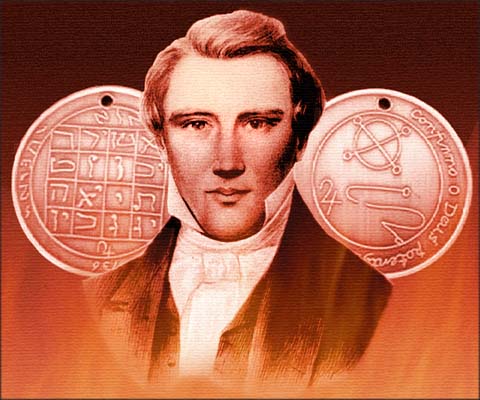
I'm not sure I understand where your coming from, help me out here. I read that you do not believe that Joe was a con man, and yet you have laid out the best researched evidence of him being a con (fidence) man. Off the top of my head, from a religious perspective, Smith is leading the pack of leaders who has American people putting their confidence into him, either indirectly, or directly. His ability to install confidence in others is on a massive scale. His picture is in their homes, his credibility is taught blindly to their youth, he is heralded as righteous throughout the world every first Sunday of the month, in other words his confidence in others created a American religious empire with few if any peers.

I believe that the Book of Abraham is a classic example of his "con". It is a T.P. Barnum type of scam on the surface but crosses the line in securing the anchor of "Mormonism" in his "victims". Again it was by chance, he saw an opening, used his wit (street smarts) and charisma to seize the moment, and then threw the Book of Abraham on to the 'Mormon Express". History shows that his "victims" swallowed hook line and sinker of the Book of Abraham, and despite the evidence presented against it still hold it as scripture from God.

Take Care

Mark
Don't take life so seriously in that " sooner or later we are just old men in funny clothes" "Tom 'T-Bone' Wolk"
_Markk
_Emeritus
Posts: 4745
Joined: Sun Feb 10, 2008 4:04 am

Re: President Joseph Smith, Jr. was a Con Man (True or False)

Post by _Markk »

Nevo wrote:
Uncle Dale wrote:But, Mormons will disagree with my conclusion, saying that Smith never had a peepstone, never admitted to using such a thing, never accepted payment for his glass-looking, was never brought into court over it, and never plead guilty.

Not so. "Mormons" acknowledge all of these points. And, as you know, several scholars view Joseph Smith's scrying as a preparation for his later role as prophet, seer, and revelator. For example:

  • Jan Shipps, "The Prophet Puzzle: Suggestions Leading Toward a More Comprehensive Interpretation of Joseph Smith," Journal of Mormon History 1 (1974): 14.

  • Alan Taylor, "Rediscovering the Context of Joseph Smith's Treasure Seeking," Dialogue: A Journal of Mormon Thought 19, no. 4 (1986): 24; also, "The Early Republic's Supernatural Economy: Treasure Seeking in the American Northeast, 1780-1830," American Quarterly 38, no. 1 (1986): 6-34.

  • Ronald W. Walker, "The Persisting Idea of American Treasure Hunting," and "Joseph Smith: The Palmyra Seer," in BYU Studies 24, no. 4 (1984): 429-472.

  • Marvin S. Hill, "Money-Digging Folklore and the Beginnings of Mormonism: An Interpretive Suggestion," BYU Studies 24, no. 4 (1984): 473-488.

  • D. Michael Quinn, Early Mormonism and the Magic World View, rev. and enl. ed. (Salt Lake City: Signature Books, 1998), 30ff.

  • Richard L. Bushman, "Joseph Smith as Translator," in The Prophet Puzzle: Interpretive Essays on Joseph Smith, ed. Bryan Waterman (Salt Lake City: Signature Books, 1999), 69-85; also, Joseph Smith and the Beginnings of Mormonism (Urbana and Chicago: University of Illinois Press, 1984), 70-80.

  • Mark Ashurst-McGee, "A Pathway to Prophethood: Joseph Smith Junior as Rodsman, Village Seer, and Judeo-Christian Prophet," (M.A. thesis, Utah State University, 2000).


Hi Nevo,

I can't speak for Dale, but I believe he meant Mormon in the average sense. Not scholarship or internet Mormons. My folks blow the simplest truths like peep stones off, and basically put their hands over their ears and shake their heads, and they are about as active as they come having a full life of callings. It would be awesome for someone to do a survey at church and ask the average folk if Joseph Smith translated the Book of Mormon with a stone in his hat and see what the answer is, It would be interesting.

Mark
Don't take life so seriously in that " sooner or later we are just old men in funny clothes" "Tom 'T-Bone' Wolk"
_Uncle Dale
_Emeritus
Posts: 3685
Joined: Wed Feb 07, 2007 7:02 am

Re: President Joseph Smith, Jr. was a Con Man (True or False)

Post by _Uncle Dale »

Markk wrote:Hi Dale,

The term has the special meaning, of instilling confidence in people.Generally a con man relies upon people believing him, so that he can take undue advantage of them.


I'm not sure I understand where your coming from, help me out here. I read that you do not believe that Joe was a
con man, and yet you have laid out the best researched evidence of him being a con (fidence) man.
...


It is a question that I hope people will discuss -- and in their discussions provide me with some
additional information and insight.

My starting point is this:

1. Smith pretended to see underground -- he attempted to instill confidence in others that he could do that
2. All of Smith's attempts to located buried treasure were failures -- he could not see under the ground
3. Knowing that all of his attempts were failures, he still attempted to convince people he could see underground
4. In March of 1826 Smith was examined before a judge, and he reportedly still pretended to see underground
5. In later years Smith either covered up or ignored his earlier pretensions to see underground

All of these factors tell me that Smith knew he could not locate hidden treasures under the ground.
He knew that he would never be able to see such a buried treasure, other than in his imagination.

------------------>Here is the crucial point<----------------------

Was Smith a dupe of his own imagination?
If so, he was not the usual sort of con man.

UD
-- the discovery never seems to stop --
_Uncle Dale
_Emeritus
Posts: 3685
Joined: Wed Feb 07, 2007 7:02 am

Re: President Joseph Smith, Jr. was a Con Man (True or False)

Post by _Uncle Dale »

Nevo wrote:
Uncle Dale wrote:But, Mormons will disagree with my conclusion, saying that Smith never had a peepstone, never admitted to using such a thing, never accepted payment for his glass-looking, was never brought into court over it, and never plead guilty.

Not so. "Mormons" acknowledge all of these points. And, as you know, several scholars view Joseph Smith's scrying as a preparation for his later role as prophet, seer, and revelator. For example:

  • Jan Shipps, "The Prophet Puzzle: Suggestions Leading Toward a More Comprehensive Interpretation of Joseph Smith," Journal of Mormon History 1 (1974): 14.

  • Alan Taylor, "Rediscovering the Context of Joseph Smith's Treasure Seeking," Dialogue: A Journal of Mormon Thought 19, no. 4 (1986): 24; also, "The Early Republic's Supernatural Economy: Treasure Seeking in the American Northeast, 1780-1830," American Quarterly 38, no. 1 (1986): 6-34.

  • Ronald W. Walker, "The Persisting Idea of American Treasure Hunting," and "Joseph Smith: The Palmyra Seer," in BYU Studies 24, no. 4 (1984): 429-472.

  • Marvin S. Hill, "Money-Digging Folklore and the Beginnings of Mormonism: An Interpretive Suggestion," BYU Studies 24, no. 4 (1984): 473-488.

  • D. Michael Quinn, Early Mormonism and the Magic World View, rev. and enl. ed. (Salt Lake City: Signature Books, 1998), 30ff.

  • Richard L. Bushman, "Joseph Smith as Translator," in The Prophet Puzzle: Interpretive Essays on Joseph Smith, ed. Bryan Waterman (Salt Lake City: Signature Books, 1999), 69-85; also, Joseph Smith and the Beginnings of Mormonism (Urbana and Chicago: University of Illinois Press, 1984), 70-80.

  • Mark Ashurst-McGee, "A Pathway to Prophethood: Joseph Smith Junior as Rodsman, Village Seer, and Judeo-Christian Prophet," (M.A. thesis, Utah State University, 2000).


Yes -- there are Mormons who know that Smith pretended to be able to see underground,
and that his pretensions along those lines helped prepare him to start up Mormonism.

I am not disagreeing with that. But I'd say 99% of Mormons will refute accusations that Smith
used a peepstone to locate buried treasures (or that he ever admitted to such a scheme).

To that 1% of Mormons whose superior knowledge refutes my earlier blanket generalization,
I pose this serious question:

Could Joseph Smith see under the ground?

UD
-- the discovery never seems to stop --
_Nevo
_Emeritus
Posts: 1500
Joined: Sat Feb 24, 2007 4:05 pm

Re: President Joseph Smith, Jr. was a Con Man (True or False)

Post by _Nevo »

Uncle Dale wrote:To that 1% of Mormons whose superior knowledge refutes my earlier blanket generalization, I pose this serious question:

Could Joseph Smith see under the ground?

I'm inclined to think he couldn't, but I don't know. I do think that Joseph Smith believed he could see things with his seer stone—and that's what ultimately matters if we're trying to determine whether or not he was a con man. Divination and scrying practices have been documented in a wide variety of cultures around the world from ancient times to the present. I think it's likely that at least some of these practitioners believed that their divinatory methods worked. My own study of the Prophet's life leads me to accept Mark Ashurst-McGee's assessment that "dowsing with a rod, seeing things in stones, and receiving heavenly revelations were as real to Smith as harvesting wheat."
_Markk
_Emeritus
Posts: 4745
Joined: Sun Feb 10, 2008 4:04 am

Re: President Joseph Smith, Jr. was a Con Man (True or False)

Post by _Markk »

Hi Dale,

I think your over analyzing this, if Smith had admitted he couldn't see underground they would have thrown him in a the hoosegow. I grew up hanging in the streets of San Bernardino Ca. A LDS colony, but a very tough town, today it is the arm pit of America. Most of my neighborhood friends are either dead or in prison, my two "best" friends in my neighborhood were con men by all rights, ALWAYS had a angle, and are in prison today for mostly things related to being thief’s. My point being a criminal rarely admits to their crime, to do so would put them on the defensive and they would loose their edge, their angle. These types are always looking for an opening for their next "con"...always, always, always. They always steer the conversation to their advantage, they are always looking ahead to their next score. Take this from a dumb Mormon kid who was taken advantage of growing up on the streets. It wasn't until I learned the very hard way that this is how a con man thinks, and it is not something they can turn on and off, it is a life style.

Please ponder on this side of what a con man is, and this you won't find in a book, or in history. My best advice to understand this is talk to a prison guard or a police officer, weight it out and certainly test it, but I can assure you it is just the way it is when it comes to these types of "street smart" personalities.

Take care, your pushing me to think in ways I don't usually go on this stuff.

Thanks

Mark
Don't take life so seriously in that " sooner or later we are just old men in funny clothes" "Tom 'T-Bone' Wolk"
_Uncle Dale
_Emeritus
Posts: 3685
Joined: Wed Feb 07, 2007 7:02 am

Re: President Joseph Smith, Jr. was a Con Man (True or False)

Post by _Uncle Dale »

Markk wrote:...
if Smith had admitted he couldn't see underground they would have thrown him in a the hoosegow
...


See Ben's posting, immediately above yours.

It's interesting, talking with that 1% of Mormons who actually get out their Bushman
writings and make use of the footnotes --- I don't have that opportunity very often.

See what Ben says -- that Smith actually believed he could see hidden treasures underground.

Smith was brought before a judge on this very issue -- and somehow managed to walk (run?)
away from the courtroom, without causing another arrest warrant to be made out against him.
No mean trick, eh?

How did he manage that?

One thing he might have done, was to demonstrate his ability to see underground, before
the judge and other witnesses. Since he could not really see buried treasures, he could
not make that demonstration. And, even if he had done so, New York law was written in such
a way that he still might have been punished for being a disorderly person, by "juggling."

Since Smith could not show proof of his "second sight," he did the next best thing, and
produced witnesses who testified that he was a true seer. No matter if he were found
guilty or not guilty, these witnesses would still have believed in him. I think that impressed
the judge. It turned out to be a better defense than trying to demonstrate "second sight."

But Smith coupled his witnesses' testimony by asserting that he did not seek out such
treasure seer work -- by showing that he was employed in another paying job.

What was the judge's reaction? Probably something like this:

"This boy is pretty close to being crazy. But many people believe what he says and they
are willing to swear that he is a good person who is not 'disorderly' or a 'vagrant.' Unless
somebody here in this courtroom swears that Smith has injured them, I'd best let him go."

Joseph Smith learned that day just what he needed to start the Mormon church: witnesses.

A dedicated con man may have a fake list of recommendations in his pocket. Like John C. Bennett,
he may even solicit recommendations to publish in a book promoting his message. But a true
con man would not assemble witnesses whom he had conned. The process works against
the fly-by-night hoaxer.

Smith embodied elements of the "con man." I think that even Ben will agree that he looked
like a con man to outsiders. But Smith was something more than that.

We have yet to describe him properly -- but our discussing his con man appearance may
be a good beginning, in our trying to figure out the best description for the fellow.

Image

UD
-- the discovery never seems to stop --
_marg

Re: President Joseph Smith, Jr. was a Con Man (True or False)

Post by _marg »

Dale,

Smith in my opinion, knew full well what he was doing and likely took pride in being able to manipulate and control people. It does take a great deal of skill and intelligence to be a good con artist.

I wrote a post addressing the pyschology of fraud. It seems to me that many of the points of the article Psychology of Fraud by Grace Duffield and Peter Grabosky or this link one can see in J. Smith.


Psychological Factors in Fraud

At first glance, a psychological explanation for fraud would appear simple—greed and
dishonesty. Such an explanation is, however, overly simplistic.

Explanations based on financial strain feature in almost every type of fraudulent activity.

Financial strain may also arise from the threat of loss of something currently owned. The threat of loss here is not only of material wealth but also of power,status and pride.

Another aspect of motivation that may apply to some or all types of fraud is ego/power. This can relate to power over people as well as power over situations. In terms of the former, the sensation of power over another individual or individuals seems to be a strong motivating force for some fraud offenders to the point that it becomes an end in itself. As one confidence man put it: For myself, I love to make people do what I want them to, I love
command. I love to rule people. That’s why I’m a con artist.
(quoted in Blum 1972, p. 46)

In manipulating and making fools of their victims, some fraud perpetrators seem to take a
contemptuous delight in the act itself rather than simply the outcome. As Stotland (1977)
points out: …sometimes individuals’ motivation for crime may have originally been relative
deprivation, greed, threat to continued goal attainment and so forth. However, as they found
themselves successful at this crime, they began to gain some secondary delight in the knowledge that they are fooling the world, that they are showing their superiority to others. (pp. 186–7)


Similar to the sense of superiority over others is the gratification obtained from mastery of a situation. This may be particularly prevalent in more complex, long-term fraud…

It also reflects the professional pride of the confidence artist. The following quotation illustrates the thrill of the chase.
"Half of being a con man is the challenge. When I score, I get more kick out of that than
anything; to score is the biggest kick of my whole life. "(quoted in Blum 1972, p. 44)

Stotland (1977) calls this motivation “ego challenge” (p. 188) and it relates to the sense of mastery and excitement in meeting and overcoming challenges. As he points out, some fraud perpetrators work very hard at their trade, so they are not in it for an “easy buck”.

Another general psychological aspect of fraud is the process of rationalisation which reduces the offender’s inhibition. Such attempts at prospective excuse have been termed “techniques of neutralisation” (Sykes & Matza 1957).

Motivation is what drives the act of fraud, while neutralisation paves the way by nullifying
internal moral objections.

Regardless of the type of fraud, most offenders seem to seek to justify or rationalise their activity. In doing so they will use “vocabularies of adjustment” (Cressey 1953, 1986; Krambia- Kapardis 2001) that manufacture rationale and extenuating circumstances and remove the
perception of criminality from the act (at least from the point of view of the perpetrator).


Diagnostic and
Statistical Manual of Mental
Disorders

.. narcissistic personality disorder is a pervasive pattern of grandiosity, a need for admiration and a lack of empathy for others. Individuals with this disorder believe that they are superior, unique and “chosen”, and they are likely to have inflated views of their own accomplishments and abilities.

They focus on how well they are doing in comparison with others, and this can take the form of an excessive need for attention and admiration.

A sense of entitlement is evident and they expect to be given whatever they want regardless of the imposition it places on others.

They demand unquestioning loyalty and are incredulous or infuriated when it is not forthcoming. They are likely to respond angrily to criticism (DSM-IV Task Force
1994, pp. 658–9).

Perhaps most relevant to fraud offences is the tendency of the narcissistic personality to usurp special privileges and extra resources that they feel they have an entitlement
to, over and above ordinary people.

Due to their ambition, confidence and ruthlessness in dealing with others, the narcissistic personality may be a high achiever in their chosen field of endeavour.

However, it can be argued that the presence of narcissistic personality traits increases the risk of fraud on the part of an individual through the attitudes they manifest, their leadership
style and the environment that they seek out.

The direct person-to-person deception of another individual can involve utter ruthlessness.
Offenders of this type may manifest a number of traits including lack of affection or empathy, lack of remorse and a general lack of conventional conscience. Such individuals are also likely to enjoy acting, as acting skills are advantageous, if not essential, to the deception inherent in face-to-face fraud.

Beyond this, skills in salesmanship and sociability are also helpful to the “con artist”.

One notes that some of the same qualities that facilitate fraud are also integral to successful
commercial activity of a legitimate nature.

What Blum uncovered in his sample is a strong thread of antisocial personality disorder.

According to the Diagnostic and Statistical Manual of Mental Disorders, antisocial personality disorder is a pervasive pattern of disregard for, and violation of the rights of, others. This basically refers to a lack of social conscience and conventional morality.

These personalities
frequently deceive, exploit and manipulate others in order to achieve personal gain (for
example, money, sex or power). A pattern of impulsivity is often apparent in all aspects of their lives and there is a special attraction to risk-taking, thrill- seeking and gambling.

These
individuals show no genuine remorse for their actions. The superficial justifications that they
offer for having hurt others resemble the neutralisations that were discussed earlier. They
blame their victims for being stupid or deserving of their fate, they minimise the harmful
consequences of their actions or they may simply display an arrogant indifference. They are also likely to believe that it is a “dog-eat-dog” world and everyone is out for number one
(DSM-IV Task Force 1994,
_Markk
_Emeritus
Posts: 4745
Joined: Sun Feb 10, 2008 4:04 am

Re: President Joseph Smith, Jr. was a Con Man (True or False)

Post by _Markk »

Hi Dale,

See what Ben says -- that Smith actually believed he could see hidden treasures underground.


I have a hard time believing that, and there is no way to prove it. I don't know how a person can actually believe that they can see under the ground unless they are seriously mentally ill, which Joseph Smith wasn't. Also, if he actually believed he could see hidden treasure then why would he tell others, and why would he charge to find it for someone else? If I really believed I could see buried treasure under the ground, I would be doing allot of digging at night by myself. It was a con plain a simple, and for others to make excuses for this con shows the fruit of his abilities as instilling confidence to others, even after all these years.

I started reading up on how the LDS church has suppressed Joseph Smith history and read a interesting statement :

People sometimes wonder that the Mormon can revere Joseph Smith. That they can by any means make a Saint of him. But they must remember, that the Joseph Smith preached in England, and the one shot at Carthage, Ill., are not the same. The ideal prophet differs widely from the real person. To one, ignorant of his character, he may be idealized and be made the impersonation of every virtue. He may be associated in the mind with all that is pure, true, lovely and divine. Art may make him, indeed, an object of religious veneration. But remember, the Joseph Smith thus venerated, is not the real, actual Joseph Smith ... but one that art has created. Tiffany's Monthly in 1859, p.170

If the real Joe was shown, the one that drank and smoked, the one that swore, many faithful might have another opinion of this man, and his trade as a con man and false prophet.

What was the judge's reaction? Probably something like this:

"This boy is pretty close to being crazy. But many people believe what he says and they
are willing to swear that he is a good person who is not 'disorderly' or a 'vagrant.' Unless
somebody here in this courtroom swears that Smith has injured them, I'd best let him go."


Or maybe Joe talked his way out with his ability to instill confidence in the judge that he was harmless, or maybe, and most likely, he paid off the judge...we don't really know and we never will, it is an argument of silence.

Smith embodied elements of the "con man." I think that even Ben will agree that he looked like a con man to outsiders. But Smith was something more than that.


If it looks like a duck....? I agree that he was much more than the average con. It's a VERY real possibility that Smith had Rock Staritist (if that's a word LoL). When a person is put on a pedestal, and told how cool they are, it can give the person a very false sense of reality, and soon they may start believing they really are cool, and I believe that this is kind of your point. But, I also believe this is a by product of his con, not the other way around. His history shows that he had ups and downs and it shows every time he got in trouble the " I'm a prophet and I receive revelation" card was thrown. He would get in trouble and then pull himself out with a revelation. Or like with Emma, if you don't let me marry other women a angel will kill you with a sword?

I understand your take, I think, but I don't really believe it is an option, he was either a true prophet surrounded by a whole lot of liars, a complete nutcase, or a very street smart opportunistic "confidence man".

I choose to believe the latter, but hey I'm listening.

Take care

Mark
Don't take life so seriously in that " sooner or later we are just old men in funny clothes" "Tom 'T-Bone' Wolk"
_Markk
_Emeritus
Posts: 4745
Joined: Sun Feb 10, 2008 4:04 am

Re: President Joseph Smith, Jr. was a Con Man (True or False)

Post by _Markk »

Hi Marg,

Smith in my opinion, knew full well what he was doing and likely took pride in being able to manipulate and control people. It does take a great deal of skill and intelligence to be a good con artist.


I agree, the pride thing I believe gives a manipulater their power, and they feed off this as it feeds their ego. The skill and intelligence though comes in different forms, In Smith's case I believe it was that street smart kind of intelligence, kind of like when Tom Sawyer talked his buddies into white washing the fence. I believe that his history shows that it started out with small, and possibly harmless ambitions, but it just evolved into a run away train that he had a hard time controlling.

Take care

Mark
Don't take life so seriously in that " sooner or later we are just old men in funny clothes" "Tom 'T-Bone' Wolk"
Post Reply