I bow down to the honored free state of Ubuntu. LOL. Enemy of slavery to Windows.The required hatred of Linux.
What 'plain and precious' doctrine was removed?
-
_MCB
- _Emeritus
- Posts: 4078
- Joined: Sat Aug 29, 2009 3:14 pm
Re: What 'plain and precious' doctrine was removed?
Huckelberry said:
I see the order and harmony to be the very image of God which smiles upon us each morning as we awake.
http://www.vatican.va/archive/ccc_css/a ... cc_toc.htm
-
_Uncle Dale
- _Emeritus
- Posts: 3685
- Joined: Wed Feb 07, 2007 7:02 am
Re: What 'plain and precious' doctrine was removed?
Uncle Dale wrote:...
the Biblical narrative history as taught in the
classes of higher education around the world.
...
There is actually some scriptural support for the Mormon position,
and I'm flabbergasted that none of our resident apologists know
(or care to share?) that pro-LDS viewpoint.
The "dispensation in the fulness of time" is a biblical precept, as is
the "antiquity of the gospel" -- at least to the point of Old Testament
events foreshadowing Christianity and having Christ as a participant.
Our modern Mormon friends could take up the argument from where
their old missionaries (like P. P. Pratt and Orson Hyde) left off, if they
really cared to.
Why don't they do that, here and now?
Well, for one thing, historical/linguistic/archaeological discoveries have
not borne out the Mormon argument for a pre-Christian "Christianity,"
nor for an "antiquity of the fulness of the gospel."
The discovery and publication of the Dead Sea scrolls essentially ended
the old Reorganized LDS arguments for Smith's "Inspired Version." Those
scrolls were roughly contemporary with Jesus and his disciples, and they
provide us with biblical scriptures essentially the same as the old Jewish
Masoretic text (which the RLDS from the 1860s to the 1960s had dissed
as "corrupt") -- yes, the Hebrew Bible is imperfect, but it was never a set
of Christian scriptures. Jesus and his disciples read essentially the same
Old Testament texts as were available to Christian readers in Palmyra, NY
in 1830.
So much for the RLDS. They caved in to modern scholarship and abandoned
the notion that Joseph Smith was "restoring" a pre-Christian Christianity
practiced by Adam, Enoch, Noah, Abraham and Moses.
Not so the LDS. Their apologists just became less vocal.
The conceit of there having been "seven dispensations" of the true religion,
each of which were headed up by a chosen prophet, is not a Jewish nor a
Christian doctrine --- it is taken directly from Islam, in which Mohamed serves
as the seventh prophet, under whom the failed sixth dispensation (of Jesus
and his chief disciples) has been superseded by Mohamed's successful seventh
glorious dispensation.
The "plain and precious" stuff supposedly "lost" during the past six "failed"
gospel dispensations is not today a useful sales pitch for LDS missionaries.
Thus, they have scaled back the old Mormon claims for the "restoration of all
things," to a rump restored gospel of baptism for the dead, the need for 12
living apostles, the non-baptism of infants, etc. For all practical purposes, the
Mormons have given up on the "restoration of all things" and have today
narrowed their position to reviving what they say apostolic Christianity was.
Do modern Mormons realize how much their leaders have abandoned in this
regard? Could they stomach the re-institution of burnt offerings under the
priesthood of a literal descendant of Aaron? The very notion sounds quaint
and fantastical.
The "plain and precious" stuff continues to dwindle -- and perhaps one day, it
will boil down to Joseph Smith having instituted "what should have been" in
the apostolic religion, rather than what the "Great and Abominable Church" has
deleted and corrupted over the centuries.
If so, it will mark another wrong turn for an accommodating latter day religion.
Better to take up the issue of the G&A Church and apply our axe to the roots
of apostolic Christianity itself. But -- it would take a living prophet to do that.
UD
-- the discovery never seems to stop --
-
_Uncle Dale
- _Emeritus
- Posts: 3685
- Joined: Wed Feb 07, 2007 7:02 am
Re: What 'plain and precious' doctrine was removed?
Uncle Dale wrote:...
If so, it will mark another wrong turn for an accommodating latter day religion.
...
hmmmmm....
I had not expected our LDS friends to give up so easily on this one.
They spend their whole lives learning what the fulness of the
everlasting gospel is -- and then have no interest in discussing
such an important, core precept of their religion with non-LDS.
Sad.
Uncle Dale
-- the discovery never seems to stop --
-
_Uncle Dale
- _Emeritus
- Posts: 3685
- Joined: Wed Feb 07, 2007 7:02 am
Re: What 'plain and precious' doctrine was removed?
Uncle Dale wrote:...what the fulness of the everlasting gospel is
...
I have lately been re-reading Dr. Burton Mack's books on the "Q-sayings"
of Jesus, the early Jesus followers, the Gospel of Thomas, etc., and have
posted some excerpts, here"
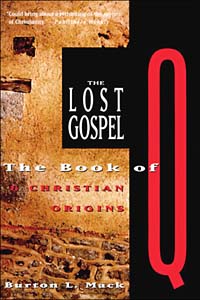
The Lost Gospel
(1993)
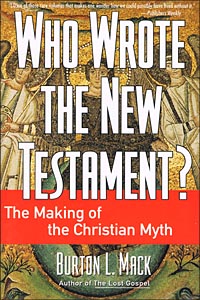
Who Wrote the New Testament?
(1995)
Although Mack is not recognized as the world's greatest authority on these
subjects, he is a noted biblical scholar and served on the "Jesus Seminar"
team, who produced the "red letter" edition of "The Five Gospels."
The historical reconstruction offered by Professor Mack is not so much the
Mormonesque depiction of "plain and precious" parts having been taken
away from the original gospel, as it is a demonstration of many, many
complex and worthless parts having been added to the original gospel.
If scholars such as Mack are to be taken seriously, then there has indeed
been much deleterious scriptural emendation carried out by an ancient
"Great and Abominable Church" ----- the apostolic Christian church, that is.
Not a pleasant idea for Mormons, nor for most modern Christians.
UD
-- the discovery never seems to stop --
-
_Yahoo Bot
- _Emeritus
- Posts: 3219
- Joined: Tue Apr 20, 2010 8:37 pm
Re: What 'plain and precious' doctrine was removed?
Burton Mack actually has a lot to offer Mormon thinking about the way the Bible was organized and structured.
But it is naïve to think that Mack will be some sort of shock to the system of Mormonism or Christianity in general.
Mack is just one point in a spectrum of theologians with a point of view based upon the early manuscripts. On the right you have F.F. Bruce or Gleason Archer (as well as the other NIV scholars) and more in the middle you have Bruce Metzger and then you have New Testament scholars who are unbelievers like Mack.
If you study the "Q" project closely, you'll see that a priori decisions were made as to what Jesus said and didn't say based upon the rejection of the miraculous. (That isn't all that Mack did, but it ranks high.) If it was miraculous, it didn't happen. Somehow I don't think that sort of theology is all that threatening to Mormonism.
-
_Uncle Dale
- _Emeritus
- Posts: 3685
- Joined: Wed Feb 07, 2007 7:02 am
Re: What 'plain and precious' doctrine was removed?
Yahoo Bot wrote:...
If you study the "Q" project closely, you'll see that a priori decisions were made as to what Jesus said and didn't say based upon the rejection of the miraculous.
...
Perhaps so. But there are many investigators contributing many voices
to the contemporary dialogue -- it is intellectually "alive" in a way that
Mormonism can never be.
Christopher M. Tuckett is perhaps the leading authority on the subject, and he
has little use for Mack. On the other hand, John S. Kloppenborg occasionally
rejoins the conversation in the professional literature, and presents what I
see as a clearer probable picture of the past than does Tuckett.
Other contributors (such as Risto Uro) on the Q/Thomas relationship, also
offer intriguing insights. I've posted an excerpt from Uro, here:
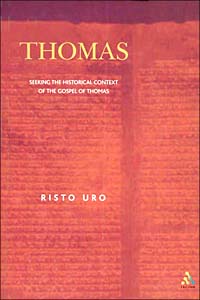
Thomas: Seeking the Historical Context
(2003)
It doesn't matter whether we accept the arguments for a written Q-text
or not. Simply focusing upon the Jesus quotations published in the canonical
gospels is enough to inform us that Jesus' message began as something
far less complex and ornate than a stack of LDS "gospel doctrine" textbooks,
purporting to explicate its "fulness."
Systems of belief and religious practice tend to become more complex over
time -- that's just due to human nature. Occasionally there are organized
attempts to cut back on the rocco embellishments of organized religion. The
Protestant Reformation attempted to cut back on the accumulation of Church
complexities and corruption, by returning to the Bible texts. Alexander
Campbell and other early 19th century restorationists attempted to cut back
on Protestant creeds and confessions, by returning to the New Testament,
to Acts, and to apostolic Christianity.
Restorationism, put into practice, can become an exercise in onion-peeling.
With each exterior religious "layer" that we strip away, we hope to come
closer to the core truth. But by removing the exterior layers we find the
"origin point" shrinking down to almost nothing.
Even the sayings of Jesus can be subjected to redaction criticism, diagrammed,
pared back to the voce veritas, and argued about.
According to Mormonism, this would entail removal of "plain and precious"
doctrines and revelation -- the very "good news" of a full gospel.
According to radical restorationists, such an endeavor might take us back to
the actual teachings of Jesus, before the invention of Christianity.
You can probably guess which of the two viewpoints intrigues me the most.
UD
-- the discovery never seems to stop --
-
_Yahoo Bot
- _Emeritus
- Posts: 3219
- Joined: Tue Apr 20, 2010 8:37 pm
Re: What 'plain and precious' doctrine was removed?
Uncle Dale wrote:Perhaps so. But there are many investigators contributing many voices
to the contemporary dialogue -- it is intellectually "alive" in a way that
Mormonism can never be.
I don't think so. Mormon theology is "small" in the sense that there aren't a lot of trained scholars to engage in the debate, and there is no systemized theology taught in a formal seminary. Nonetheless, Mack raises points that are not new. Talmadge engaged in pretty forceful debates over "higher criticism" and seemed capable of doing so.
So-called "higher criticism" has a lot to offer, however. It reveals corruption of the original autographs.
-
_Uncle Dale
- _Emeritus
- Posts: 3685
- Joined: Wed Feb 07, 2007 7:02 am
Re: What 'plain and precious' doctrine was removed?
Yahoo Bot wrote:Uncle Dale wrote:Perhaps so. But there are many investigators contributing many voices
to the contemporary dialogue -- it is intellectually "alive" in a way that
Mormonism can never be.
I don't think so. Mormon theology is "small" in the sense that there aren't a lot of trained scholars to engage in the debate, and there is no systemized theology taught in a formal seminary. Nonetheless, Mack raises points that are not new. Talmadge engaged in pretty forceful debates over "higher criticism" and seemed capable of doing so.
So-called "higher criticism" has a lot to offer, however. It reveals corruption of the original autographs.
We could use more GAs like Talmadge -- if for no other reason, than to drive a
stake into the "young earth" doctrines published in the 1835 Lectures on Faith.
But a GA-centered, top-down theologizing is not the same thing as an open
forum of scholars utilizing the scientific method and subjecting each other's
ostensible contributions to a rigorous peer review.
Contrast the generally intelligent discussion exhibited at any after-services
luncheon in a Unitarian-Universalist congregation, with the similar banter
observable at the local ward meetinghouse, or even among LDS profs taking
a quick bite between religion classes in the Cougar Den food court at the Y.
There is a difference and I think it is an important difference.
But, we need not spend a great deal of time discussing what Mormons discuss
among themselves. We might better spend that time investigating what the
LDS have contributed to modern knowledge, concerning the removal of even
apostolic doctrines and practices from the canonical scriptures.
So far, at least, the LDS scriptural scholars and theologians do not seem to
have made much of an effort to demonstrate and document their discoveries
of "plain and precious" subtractive scriptural redaction to the rest of the world.
Even the LDS message on what (and who) is included in the Great and
Abominable Church appears to have retrogressed. I doubt that modern
Mormons would be comfortable in hearing Parley P. Pratt reappear before
a modern gathering of scriptural students, to explain the Harlot Church set
upon seven hills in Italy, or some such religious polemics.
Perhaps Mormonism (or at least Latter Day Saintism, including my own home
sect) can one day offer constructive additions to world-wide scholarship. A
faint venture in this direction can be seen in some LDS participation in the
study of the Dead Sea scrolls, and in LDS contributors in the Anchor Bible
Dictionary, and a few other contemporary forums.
If that day ever comes, I'd suggest that those future Saints take up our old
battle-cry of the Bible being corrupt and unreliable.
Dr. Mack might even agree.
UD
-- the discovery never seems to stop --
-
_Uncle Dale
- _Emeritus
- Posts: 3685
- Joined: Wed Feb 07, 2007 7:02 am
Re: What 'plain and precious' doctrine was removed?
Uncle Dale wrote:...
the removal of even apostolic doctrines and practices from the
canonical scriptures.
...
I recall a time -- perhaps when I was in my early twenties -- when I read
the Book of Acts as reliable history, and thought of Christian origins as
consisting of Paul and the original apostles (who may have bickered a
little over small details, but taught a homogeneous and consistent doctrine).
I sometimes wish I could return to that simplistic view of things. But I
cannot. I see no reason to believe that there ever was an apostolic
Christianity such as is depicted in Acts of the Apostles -- much less that
it was the sole, and only true, religion promulgating Jesus' gospel.
I now see a much more variegated, inconsistent and contradictory
Christian past -- which probably did not evolve into a semblance of the
Second Chapter of Acts version of religion for a dozen decades.
What have we missed seeing and knowing from those largely undocumented
first dozen decades? Paul? Is his the genuine, one true religion? I think not.
Were there other offshoots of the original Jesus advocates which we have
lost track of and forgotten? Could "restoring the gospel" involve our seeking
out and understanding the religion of people who would never have agreed
with Paul, on even the most essential of the "plain and precious parts?"
Food for thought.
UD
-- the discovery never seems to stop --
-
_MCB
- _Emeritus
- Posts: 4078
- Joined: Sat Aug 29, 2009 3:14 pm
Re: What 'plain and precious' doctrine was removed?
Definitely. Please correct me on this if I am wrong, but the Douay-Rheims and the KJV were both dependent on the Vulgate (Latin text), while recent Catholic and Protestant versions also use the Greek, and Hebrew, as well as the Dead Sea Scrolls. I think the Catholic church is confident enough in the essential accuracy of the Text to explore. There are later additions, but they are scripturally consistent, and do not change the meaning.Could "restoring the gospel" involve our seeking
out and understanding the religion of people who would never have agreed
with Paul, on even the most essential of the "plain and precious parts?"
Food for thought.
If anything, the "plain and precious" parts of the Old Testament that the Protestants dropped become an irony in the copying of the stories of Maccabees.
Huckelberry said:
I see the order and harmony to be the very image of God which smiles upon us each morning as we awake.
http://www.vatican.va/archive/ccc_css/a ... cc_toc.htm