Jacob Hansen: Yesser No?

The catch-all forum for general topics and debates. Minimal moderation. Rated PG to PG-13.
Post Reply
MG 2.0
God
Posts: 8273
Joined: Mon Aug 30, 2021 4:45 pm

Re: Jacob Hansen: Yesser No?

Post by MG 2.0 »

sock puppet wrote:
Thu Aug 21, 2025 10:27 pm
MG 2.0 wrote:
Thu Aug 21, 2025 10:10 pm
Are you sure there was nothing more than that? Was Paul and apostle and representative of Jesus Christ? What did he see on the road to Damascus? What about the church that was organized upon the foundation of apostles and prophets? Did Jesus teach that he was the Son of the Father? What did he mean when he taught that he was the resurrection and the life and that no man comes to the Father except through Him?

Are you going to answer these questions?

Regards,
MG
After Jesus died, Peter organized a church. Nowhere in the Bible, or even your Book of Mormon, does it purport that Jesus set up a church. If it was so important to Jesus to set up a church, why didn't he do that during his 3 year ministry? Instead he used his time to teach beatitudes, not wasting it on setting up a church.
He didn't set up an organizational church with Ward Houses and Stake Centers as we see today. At his time the movement was based on discipleship, relational leadership, spiritual gifting, and a sense of community purpose. He also called twelve apostles empowering them with a special sense of mission that was different from the core disciples. If you think about it, that is what the CofJCofLDS is.

Where critics get hung up is on the fact that in order to carry out a similar mission that the Savior started during His mortal sojourn it takes money/wealth, an lots of it, in today's world to move the gospel message throughout the planet. Some critics take it upon themselves to determine how and when this money should be spent. Jesus's seeding of the church at the meridian of time has grown and multiplied exponentially beyond anything that could have been expected at His time and place. The Catholic Church and the mission of Paul and Peter and others played their own part in that spread throughout the empire of Rome and on from there. Moreso, it seems, than the Jerusalem church under the leadership of James and John. That community gradually lost its influence in regards to the spread of Christianity throughout the known world at the time.

I think that you are barking up the wrong tree in your expectations of what might be seen on the ground in ancient times vs. our day.

Regards,
MG
MG 2.0
God
Posts: 8273
Joined: Mon Aug 30, 2021 4:45 pm

Re: Jacob Hansen: Yesser No?

Post by MG 2.0 »

MG 2.0 wrote:
Thu Aug 21, 2025 10:10 pm
I Have Questions wrote:
Thu Aug 21, 2025 7:27 pm
That’s a very good point. You cannot restore something that never was. Jesus didn’t set up and operate a “church” or a “religion”. He was just an itinerant preacher who espoused some grand principles about loving neighbours and helping the downtrodden. It was a very simple message which gets lost nowadays under all the policies and practices and rituals and ordinances that he simply never got involved with. If only Joseph Smith had restored that.
Are you sure there was nothing more than that? Was Paul and apostle and representative of Jesus Christ? What did he see on the road to Damascus? What about the church that was organized upon the foundation of apostles and prophets? Did Jesus teach that he was the Son of the Father? What did he mean when he taught that he was the resurrection and the life and that no man comes to the Father except through Him?

Are you going to answer these questions?

Regards,
MG
Didn't think so.
User avatar
bill4long
God
Posts: 1182
Joined: Thu Oct 28, 2021 3:56 am

Re: Jacob Hansen: Yesser No?

Post by bill4long »

Rivendale wrote:
Fri Aug 15, 2025 6:23 pm
Here is a more in depth non one liner that represents Jacob's dishonesty. He did this video https://youtu.be/o-z_NBEXxIU?si=DLcG-rh06HWdvuaL on the book of Abraham. There was a section on his original recording where he said " not gonna lie it would be damning if this was in Joseph's handwriting ". Dan Vogel made him aware in the comments that it was in his handwriting and Kolby Reddish picked up on it and made this post detailing what he did. https://old.reddit.com/r/Mormon/c ... _mistakes/. Read both the reddit comments and the YouTube comments to see exactly how dishonest he was. Tldr? He took down the video erased that section and kept the same conclusion.
Dan is posting a new video today Schooling Jacob Hansen on the Book of Abraham. Should be fun.

https://www.youtube.com/watch?v=NiBalURH2sk
This space for rent - cheap
User avatar
PseudoPaul
Valiant B
Posts: 194
Joined: Fri Nov 05, 2021 2:12 pm

Re: Jacob Hansen: Yesser No?

Post by PseudoPaul »

MG 2.0 wrote:
Thu Aug 21, 2025 10:06 pm
If Christianity in its pure form was to exist on a global level with a central authority...,what would it look like to you today? Pure doctrines, ordinances, teachings, hierarchal structure, Priesthood, etc.

Jesus was baptized, right? The Day of Pentecost, there was an outpouring of the Spirit. What was that? What was the sealing power which was given? Did the apostles/disciples have a special authority/power to cast out demons, etc.? Did Jesus teach that He and the Father were one or separate? Did ancient Christianity practice baptism? Was it necessary?

Regards,
MG
That's a really good question. We do have limited information, but I'll try to lay out what it might look like depending on which faction or source we are following:

The religion of Jesus of Nazareth:

• Jesus is a prophet and messiah, not God
• The law of Moses must be followed by Jews
• Followers must be morally exemplar
• Salvation comes by good works or even just by living in poverty
• No teaching that Jesus would be dying for anyone's sins
• Baptism was to prepare people for the coming eschaton - the breaking in of God into human history to overturn injustice
• In the coming eschaton, Rome will be overthrown, along with the wealthy collaborators with Rome within Judaism
• The social order will be reversed - the rich will live in poverty and the poor will be well fed
• There is less emphasis on marriage and family and more emphasis on living a life of voluntary homelessness and poverty (at least until the eschaton comes)
• The righteous will be raised from the dead and live in peace and plenty. The wicked will die a painful death, and never be resurrected
• It's unclear what role, if any, gentiles have in this religion

The religion of James (Jesus' brother and leader of the Jerusalem church) and Peter:

• Jesus was a human being adopted as God's son and raised from the dead following his death
• The law of Moses must be followed by Jews
• No virgin birth!
• Gentiles must be circumcised and follow SOME parts of the law of Moses, but not all
• Followers must hold to "the way of life"
• Salvation comes by good works and following the law of Moses, as well as following the Jesus movement
• They did baptize converts, but it's unclear how they interpreted baptism
• Some of them didn't seem to have an atonement theology. The Didache, an early Jewish Christian document, lacks any atonement theology in the celebration of the Eucharist. However some of them probably did have some kind of primitive atonement theology. Atonement theology exists in Matthew, which is a Jewish Christian gospel. However there is no atonement theology in Luke.
• We don't have much information on this form of Jewish Christianity. The Ebionites probably came from James' Jerusalem church, but were considered heretical by other Christian factions
• James had primacy over Peter

The religion of Paul:

• Jesus is an angel who incarnated as a human being, and was then promoted to divine sonship at the resurrection by virtue of his obedience to God
• The law of Moses can (should?) be followed by Jews
• Gentiles are under no obligation to follow the law of Moses. They should not be circumcised
• Followers must be morally exemplar
• Salvation comes by faith in Jesus, not following the law
• Baptism was done in order to make us dead to sin. When we come out of the waters we are reborn as a "new man"
• Jesus will return within the lifetime of Paul
• The righteous will be raised from the dead. The wicked will die a painful death, and never be resurrected. They are utterly destroyed
• When people are raised from the dead, their physical body is transformed into a spirit body - which can be thought of something like a "wind body"
• There is no emphasis on marriage and family - there is no point in starting a family since Jesus is about to return

In all three cases, there wasn't a clear hierarchy of leadership, other than that many considered James to be the primary authority after Jesus' death. He probably was considered to be the leader by virtue of being Jesus' brother.

However there was no centralization or direct control in the various congregations. You didn't start to see formal leadership titles until the late first and second century. Jesus wasn't trying to start a church - it was a loose movement of Jewish apocalypticists with an emphasis on voluntary poverty, non-violence and righteousness.
MG 2.0
God
Posts: 8273
Joined: Mon Aug 30, 2021 4:45 pm

Re: Jacob Hansen: Yesser No?

Post by MG 2.0 »

PseudoPaul wrote:
Fri Aug 22, 2025 2:59 pm
MG 2.0 wrote:
Thu Aug 21, 2025 10:06 pm
If Christianity in its pure form was to exist on a global level with a central authority...,what would it look like to you today? Pure doctrines, ordinances, teachings, hierarchal structure, Priesthood, etc.

Jesus was baptized, right? The Day of Pentecost, there was an outpouring of the Spirit. What was that? What was the sealing power which was given? Did the apostles/disciples have a special authority/power to cast out demons, etc.? Did Jesus teach that He and the Father were one or separate? Did ancient Christianity practice baptism? Was it necessary?

Regards,
MG
That's a really good question. We do have limited information, but I'll try to lay out what it might look like depending on which faction or source we are following:

The religion of Jesus of Nazareth:

• Jesus is a prophet and messiah, not God
• The law of Moses must be followed by Jews
• Followers must be morally exemplar
• Salvation comes by good works or even just by living in poverty
• No teaching that Jesus would be dying for anyone's sins
• Baptism was to prepare people for the coming eschaton - the breaking in of God into human history to overturn injustice
• In the coming eschaton, Rome will be overthrown, along with the wealthy collaborators with Rome within Judaism
• The social order will be reversed - the rich will live in poverty and the poor will be well fed
• There is less emphasis on marriage and family and more emphasis on living a life of voluntary homelessness and poverty (at least until the eschaton comes)
• The righteous will be raised from the dead and live in peace and plenty. The wicked will die a painful death, and never be resurrected
• It's unclear what role, if any, gentiles have in this religion

The religion of James (Jesus' brother and leader of the Jerusalem church) and Peter:

• Jesus was a human being adopted as God's son and raised from the dead following his death
• The law of Moses must be followed by Jews
• No virgin birth!
• Gentiles must be circumcised and follow SOME parts of the law of Moses, but not all
• Followers must hold to "the way of life"
• Salvation comes by good works and following the law of Moses, as well as following the Jesus movement
• They did baptize converts, but it's unclear how they interpreted baptism
• Some of them didn't seem to have an atonement theology. The Didache, an early Jewish Christian document, lacks any atonement theology in the celebration of the Eucharist. However some of them probably did have some kind of primitive atonement theology. Atonement theology exists in Matthew, which is a Jewish Christian gospel. However there is no atonement theology in Luke.
• We don't have much information on this form of Jewish Christianity. The Ebionites probably came from James' Jerusalem church, but were considered heretical by other Christian factions
• James had primacy over Peter

The religion of Paul:

• Jesus is an angel who incarnated as a human being, and was then promoted to divine sonship at the resurrection by virtue of his obedience to God
• The law of Moses can (should?) be followed by Jews
• Gentiles are under no obligation to follow the law of Moses. They should not be circumcised
• Followers must be morally exemplar
• Salvation comes by faith in Jesus, not following the law
• Baptism was done in order to make us dead to sin. When we come out of the waters we are reborn as a "new man"
• Jesus will return within the lifetime of Paul
• The righteous will be raised from the dead. The wicked will die a painful death, and never be resurrected. They are utterly destroyed
• When people are raised from the dead, their physical body is transformed into a spirit body - which can be thought of something like a "wind body"
• There is no emphasis on marriage and family - there is no point in starting a family since Jesus is about to return

In all three cases, there wasn't a clear hierarchy of leadership, other than that many considered James to be the primary authority after Jesus' death. He probably was considered to be the leader by virtue of being Jesus' brother.

However there was no centralization or direct control in the various congregations. You didn't start to see formal leadership titles until the late first and second century. Jesus wasn't trying to start a church - it was a loose movement of Jewish apocalypticists with an emphasis on voluntary poverty, non-violence and righteousness.
In the Book of John do we find teachings of Jesus having been a pre-existent divine being? Connected with this do we see later Gentile Christian communities, increasingly affirming Jesus’ divine status (Son of God)?

Would you expect that the early teachings of Jesus and His disciples to be fixed in time? In other words, that what you have listed (by the way, thank you very much!) was to BE anything other than what it was? I think that might be the 'million dollar question'.

Again, what do you see as the very earliest teachings in regards to Jesus as a pre-existent divine being? It seems as though this ONE teaching would have a spin off influence in regards to everything else that came later as the early church fathers and the Apostle Paul developed early Christian doctrine.

Fixing in time the earliest teachings of Jesus and his disciples/apostles seems to be a rather unreasonable position to take. Things evolve and change. The question would be, if this is so, whether or not those early teachings evolved through revelation and inspiration or simply the mind of men.

Regards,
MG
MG 2.0
God
Posts: 8273
Joined: Mon Aug 30, 2021 4:45 pm

Re: Jacob Hansen: Yesser No?

Post by MG 2.0 »

Marcus, I'd be interested in your comments and contributions in regards to my previous post if you would be willing to spend the time doing so. I would imagine your knowledge and wisdom in regards to ancient Christians may supercede that of others on this board. Excluding of course, Pseudo Paul.

Thanks for you time! This will provide an opportunity for actual dialogue rather than the rather blatant trolling that you seem to be more or less 'hooked' on.

Regards,
MG
User avatar
PseudoPaul
Valiant B
Posts: 194
Joined: Fri Nov 05, 2021 2:12 pm

Re: Jacob Hansen: Yesser No?

Post by PseudoPaul »

MG 2.0 wrote:
Fri Aug 22, 2025 4:36 pm
In the Book of John do we find teachings of Jesus having been a pre-existent divine being? Connected with this do we see later Gentile Christian communities, increasingly affirming Jesus’ divine status (Son of God)?

Would you expect that the early teachings of Jesus and His disciples to be fixed in time? In other words, that what you have listed (by the way, thank you very much!) was to BE anything other than what it was? I think that might be the 'million dollar question'.

Again, what do you see as the very earliest teachings in regards to Jesus as a pre-existent divine being? It seems as though this ONE teaching would have a spin off influence in regards to everything else that came later as the early church fathers and the Apostle Paul developed early Christian doctrine.

Fixing in time the earliest teachings of Jesus and his disciples/apostles seems to be a rather unreasonable position to take. Things evolve and change. The question would be, if this is so, whether or not those early teachings evolved through revelation and inspiration or simply the mind of men.

Regards,
MG
Another good question. John is kind of its own thing. Usually John is thought to be the product of a sectarian Christian community (referred to by scholars as the Johannine community) that considered itself apart from and superior to other Christian communities.

In John, Jesus is the pre-existent "Logos" - a creator demigod that God used to create the world. This concept comes from Philo, ultimately. Philo was first century Hellenized Jewish thinker who incorporated Platonism into his Judaism.

I don't think necessarily it was one "thought leader" or one particular community evolving very much over one lifetime. It was different communities springing up with different "thought leaders" that had new interpretations. For example we know that although the Johannine community was very sectarian, there was an offshoot group that that community left because they had a different opinion about whether Jesus was resurrected in the flesh or not.

The earliest known view about Jesus having been a pre-existent divine being comes from Paul. Although Paul's Christology was lower than the one found in John, he did think that Jesus was some kind of divine agent of God before his birth.

We don't see a neat evolution from low Christology to high in the first century. We get Paul very early with a kind of medium Christology. We get the Jewish Christians, the earliest group predating even Paul, with a low Christology. We get John at the end of the 1st century with a medium high Christology. And eventually Christianity settles on a high Christology. I'd describe Mormonism as having a medium high Christology. Not identical to John but kind of similar in a few ways.

"The question would be, if this is so, whether or not those early teachings evolved through revelation and inspiration or simply the mind of men. "

History can't answer that question. Historians don't have access to God and can't comment on whether some theological teaching is right or wrong.

More about John:

https://www.earlychristianwritings.com/john.html
User avatar
PseudoPaul
Valiant B
Posts: 194
Joined: Fri Nov 05, 2021 2:12 pm

Re: Jacob Hansen: Yesser No?

Post by PseudoPaul »

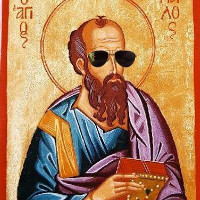
Here's some more food for thought. This was posted on the Academic Biblical subreddit. It's handy for getting a sense of just how diverse the views were in early Christianity. There was never a consensus view until a few centuries in with the development of the Catholic Church. The text below is quoted from that sub:

The canonical gospels and the authentic and inauthentic Pauline texts were mostly crafted between (perhaps as early as) 60 and 185, and were created to advance the positions of Christians who sought to advance their own ideological, philosophical, and theological agendas.

During this timeframe, several distinct and influential groups contributed to the later orthodoxical Christian paradigm.

Below are the sects which were probably most influential to the emerging Christian orthodoxy:

The Nasaraeans – The Nasaraeans were a heretical Jewish sect not explicitly attached to Christianity. Hippolytus and Epiphanius describe a sect leader named Elxai, who in the late 1st/early 2nd century, led a band of Nasaraeans, Nazarenes, Ebionites, and Essenes; this group believed the Christ was a masculine, 96 mile tall figure in the sky, and had a feminine counterpart, which was the Spirit. The Nasaraenes rejected the Pentateuch (first 5 books of the Old Testament), believed scribes had corrupted Moses’ teachings, and they claimed to possess Moses’ true teachings. Epiphanius also said they resembled the Hemerobaptists, which, coupled with these other details, implies they might be the source of the John the Baptist sect. Epiphanius puzzled over how the Nasaraeans could be Jewish in nationality, practice Jewish customs, yet reject Judaism’s tenets as he understood them. My speculation is that these Nasaraeans were derivatives of a Queen of Heaven cult, which revered a long-lost deity which was purged during King Josiah’s Deuteronomic reform in the 7th century BCE.

The Cerinthians – Cerinthus and his followers were placed between Ephesus and Galatia by early heresy hunters, notably Irenaeus of Lyon and Epiphanius of Salamis. Cerinthus appears to have been one of the first heretics who interjected the notion of a Demiurge, or a lower God/angel who created Earth, into Christianity. Several groups, over hundreds of years, claimed Cerinthus contributed authorship to Revelation and the Gospel of John. Cerinthus believed that the spirit descended onto Jesus in the form of a dove after Jesus’ baptism, and left him prior to his death on the cross. In this sense, Cerinthus saw Jesus as a regular man who was separate from the Spirit which was embodied within him. According to Irenaeus, Cerinthus’ followers might have found common ground with the Gospel of Mark. Epiphanius claimed the Cerinthians used the Gospel of Matthew; my speculation is that this earliest Matthew resembled Mark a great deal, and eventually, the Gospel diverged into extant Mark and Matthew. If one presumes that Cerinthus was a consumer of Revelation, then Revelation 12:17, Revelation 5:8, and Revelation 8:3-4 might suggest that he was a derivative of the Nasaraenes.

The Ebionites – A Jewish sect which, like Cerinthus, believed that the Spirit and Jesus were separate. Unlike Cerinthus, the Ebionites believed that the most high God (Elyon) was the same God who created the Earth – this is presumably the reason why the Ebionites followed Jewish law; yet, Irenaeus connects the Ebionites to the Cerinthians, in terms of their Adoptionist theology (where Jesus and the Spirit were separate). In this sense, the Ebionites broke from the Cerinthians; Irenaeus specifically pointed out that the Ebionites rejected Paul, which makes them the prime candidates for being “men from James” Paul described in Galatians. Given the contrast between the Ebionites and (both) Cerinthus and Paul, one might speculate that Cerinthus and Paul had other connections not noted by early Christian historians. For example, Paul, in 2 Corinthians 12 makes reference to a man who was taken up to heaven and saw unspeakable things. The Ebionites rejected the notion of the virgin birth, but used (and probably authored) an early version of the Gospel of Matthew. This matrix may also suggest Cerinthus and Paul’s Cephas were the same person.

The Carpocratians – Mentioned in Against Heresies 1.25, the Carpocratians seem to be something of a synthesis between the Cerinthians (AH i.26.1) and the Ebionites (AH i.26.2); they had Gnostic elements within their theology, and espoused the view that a broad set of experiences must be had, perhaps across multiple lifetimes (transmigration of souls), in order to get out of the material realm and resurrender one’s material elements back to the rulers of this world. They appear to have used the blurb about the “very last penny”, which can be found in the Ebionite/Nazarene Matthew, as well as Luke, which makes them candidates for being the proxy between the Cerinthians and the Marcionites.

The Marcionites – Marcion appears to have been a 3rd generation Docetist, which posited that Jesus was not quite flesh; he rejected Jewish law and elevated faith above acts. Marcion also claimed that Jesus was sent from a previously unknown God, not the God of the Old Testament, whom he called Yaldabaoth. In this sense, Marcion had much in common with Cerinthus, and like Paul, would have faced the Ebionites’ disdain. Marcion rejected the notion that Jesus occupied any flesh, or suffered on the cross, because Marcion saw Jesus as a phantom. The Marcionites elevated Paul as the highest apostle, and the centerpiece of the Marcionite canon (which appears to be the first ever formalized canon) was Paul’s epistle to the Galatians. In fact, Marcion appears to have been the first Christian to use Paul’s letters in his theology, which makes him a primary candidate for Pauline authorship. The Marcionite canon also included a “modified” version of the Gospel of Luke, along with the other Paul letters, except for the Pastoral letters (1 and 2 Timothy, Titus).

The Johannines – located in Western Turkey, in Smyrna, Ephesus, Sardis, and other cities mentioned in the Book of Revelation. The Johannines supposedly authored the extant John-centric texts, including Revelation and John’s Gospel. Great care was taken among early Christian leaders, including Irenaeus, to purport that John the Apostle (son of Zebedee), moved to Ephesus from Jerusalem around the time of the destruction of Jerusalem (C. 70CE) – Against Heresies 3.1.1. Several Marcionite notions trickled into some early Johannine literature, notably the Acts of John, which had John saying that he used to walk side-by-side with Jesus, but never saw his footprints. Jesus’ statement to Mary, telling her not to touch him because he had not yet returned to his father (John 20:17), also seems to invoke a Marcionite Docetism. The Johannines, like the Marcionites, had a robust notion of the Demiurge, but unlike the Marcionites, the Johannines said the Demiurge was the Logos (or the Word). In the Gospel of John, Jesus’s first miracle was preceded by his mother rendering authority to Jesus; prior to Jesus’s death on the cross, Jesus turned over his disciples to his mother; this might suggest a connection between the Queen of Heaven cult (and by extension, the Nasaraeanes and Cerinthians) and the Johannine community.

The Thomasites – Wrote the Gospel of Thomas, and several other Thomas-centric texts. The Gospel of Thomas is important because, as it is a “sayings gospel” rather than a depiction of Jesus’s acts, it might have preceded the Synoptic Gospels. Similar to the Johannines, with the possible exception that they put more emphasis on mystical visions; this Christian evolution, which decreasingly relied on mystical visions, might indicate an evolving power structure which de-emphasised an inheritor of the Spirit (Paraclete), and simultaneously relied more on church hierarchy. In the Gospel of Thomas, Jesus seems to indicate that the Paraclete would not be born of a woman; an interesting parallel is that Paul claimed to be born of a miscarriage in 1 Corin 15:8. Traditionally placed in Syria, to the South of the Johannines. Potential Syrians were Ignatius, Justin Martyr, Tatian (who was a student of Justin Martyr, and later became a Valentinian), and a generation later, Theophilus of Antioch, who was a potential recipient of the prologues in Luke and Acts after 160. In the Gospel of Thomas, Jesus told his followers to follow James, which perhaps suggests that there was an emerging anti-Paul polemic.

The Nazarenes – Very similar to the Ebionites, with the notable difference being their acceptance of the virgin birth and bodily resurrection; this detail makes them the likely authors of the virgin birth narrative in the Gospel of Matthew, along with the introduction of Jesus’ familial lineage. They seemed to undergo a co-evolution with the Johannines.

The Sethians – Were either located in Syria or Alexandria – perhaps both. They had a robust, 5-stage baptism, called the “five seals”. Though not much is known about the specifics of the five seals, it might resemble Mandaean baptismal rites. Had a very robust cosmology which proposed that there was a fall from the Godhead, and this fall gave rise to the material realm. In this case, the Sethians resembled the Marcionites and Cerinthians. Yet the Sethians’ cosmology was more complex than either Marcion or Cerinthus. They seemed to have taken much influence from Platonists and Pythagoreans of the day, as their creation myth was similar to those Greek philosophers, which proposed that the Monad formed immaterial ideals in a higher realm, and from that realm emerged an imperfect material copy. They were likely forerunners to the Valentinians.

The Valentinians – Similar to the Marcionites, in that they saw the God of the Old Testament as the creator of the world, but a different God as the highest. Like the Marcionites, the Valentinians revered Paul and referred to the middle-man Demiurge as Yaldabaoth. This makes the Valentinians likely 2nd generation Marcionites who introduced notions that were inherited from Alexandrian and Syrian Gnostic sources. One possibility is that these alterations to earlier theologies were brought on by increasing political strife between Christian groups in different geographic locations. They consumed the Gospel of John, and there are indications that they had multiple tiers of initiation. Clement of Alexandria claimed that Valentinus received instruction from Theudas, a disciple of Paul. Another possibility is that Paul was a hearer of Theudas, which creates a compelling connection between the Valentinians and John the Baptist.

The Naassenes – A Gnostic James-centric sect, which appears to have been as early as the early 2nd century CE. Perhaps an offshoot of the Ebionites, who revered Mariamne (Mary), who was said to have taken instruction from James. The Naassenes revered the serpent, similar to the Sethians and the Ophites (and the Eleusinians, who were not Christian). This reverance for Mary is similar to the Johannine concern for Jesus’s mother.

The Melchizedekians – According to the Melchizedekians, Christ was in the image of Melchizedek, and therefore, was inferior to Melchizedek; there are similar themes like this in Sethian mythology as well, as it pertains to Adam, Seth, and Jesus. Theodotus, a Valentinian, held that Melchizadek was higher than Jesus. One implication is that the Melchizedekians believed they ought to replace the Aaronic priesthood. This notion is found in Hebrews 7. Melchizadek gave wine to Abraham when he was expecting water; in John 2, Jesus performed an analogous act.

The Montanists – Also referred to as the Phrygian heresy and the New Prophesy. Originated in Central Turkey, to the south of the Marcionites, sometime in the early-to-mid-2nd century. The most prominent defender of his heresy was Tertullian, the staunch anti-Marcionite, who supposedly joined their sect around 207CE. Often compared to modern Pentacostals, in terms of the “trances” members were under, in which they were “possessed” by the spirit. Seem to have been influenced by the Johannines in Western Turkey, as well as the Syrian community to the south; however, the view is that the Phyrgians were less influenced by Hellenization than their counterparts.They were millenialists, and believed that there would be 1000 years of peace after Jesus’s return; this suggests they consumed Revelation, as this idea is found in Revelation 20:1-6.

https://old.reddit.com/r/AcademicBiblic ... ntify_the/
MG 2.0
God
Posts: 8273
Joined: Mon Aug 30, 2021 4:45 pm

Re: Jacob Hansen: Yesser No?

Post by MG 2.0 »

PseudoPaul wrote:
Fri Aug 22, 2025 5:44 pm
Here's some more food for thought. This was posted on the Academic Biblical subreddit. It's handy for getting a sense of just how diverse the views were in early Christianity. There was never a consensus view until a few centuries in with the development of the Catholic Church.
Did all of these factions of early Christianity pretty much dissolve into oblivion more or less as the Catholic Church assimilated and prioritized the doctrines and practices of these early movements? Who were, let's say, the "top dogs" in forming and implementing this assimilation and how did they convince the Holy Fathers of Rome to 'stick to it' rather than sticking it to them?

This is fascinating stuff. If you were to compare Mormonism with all of the factions/communities that you've described, is there any one, two, or three that would rise to the top if you were to say they compared on many points of doctrine/belief with the Restored Church of Jesus Christ?

Regards,
MG
MG 2.0
God
Posts: 8273
Joined: Mon Aug 30, 2021 4:45 pm

Re: Jacob Hansen: Yesser No?

Post by MG 2.0 »

Ephesians 4:5-6
King James Version
5 One Lord, one faith, one baptism,
6 One God and Father of all, who is above all, and through all, and in you all.

It took a while for everything to gel. And even then, the jello may have been tainted. But it was firm. The question is whether or not this evolved Christianity that had giant influence throughout the world was tainted from the start as a result of the mix and match process from all the Christian communities. And whether or not as time went on there was a need for an overhaul of the original recipe? At the same time knowing that the jello dish assimilated from all of the early factions of the Jesus movement was 'good enough' and tasty enough to get the Good Word out into the world and take hold.

The Apostle Paul may have gotten it right. ;)

Regards,
MG
Post Reply